Jul 9, 2026Auto-Parts
How to Choose a Condenser (Professional Selection Guide)
Condenser
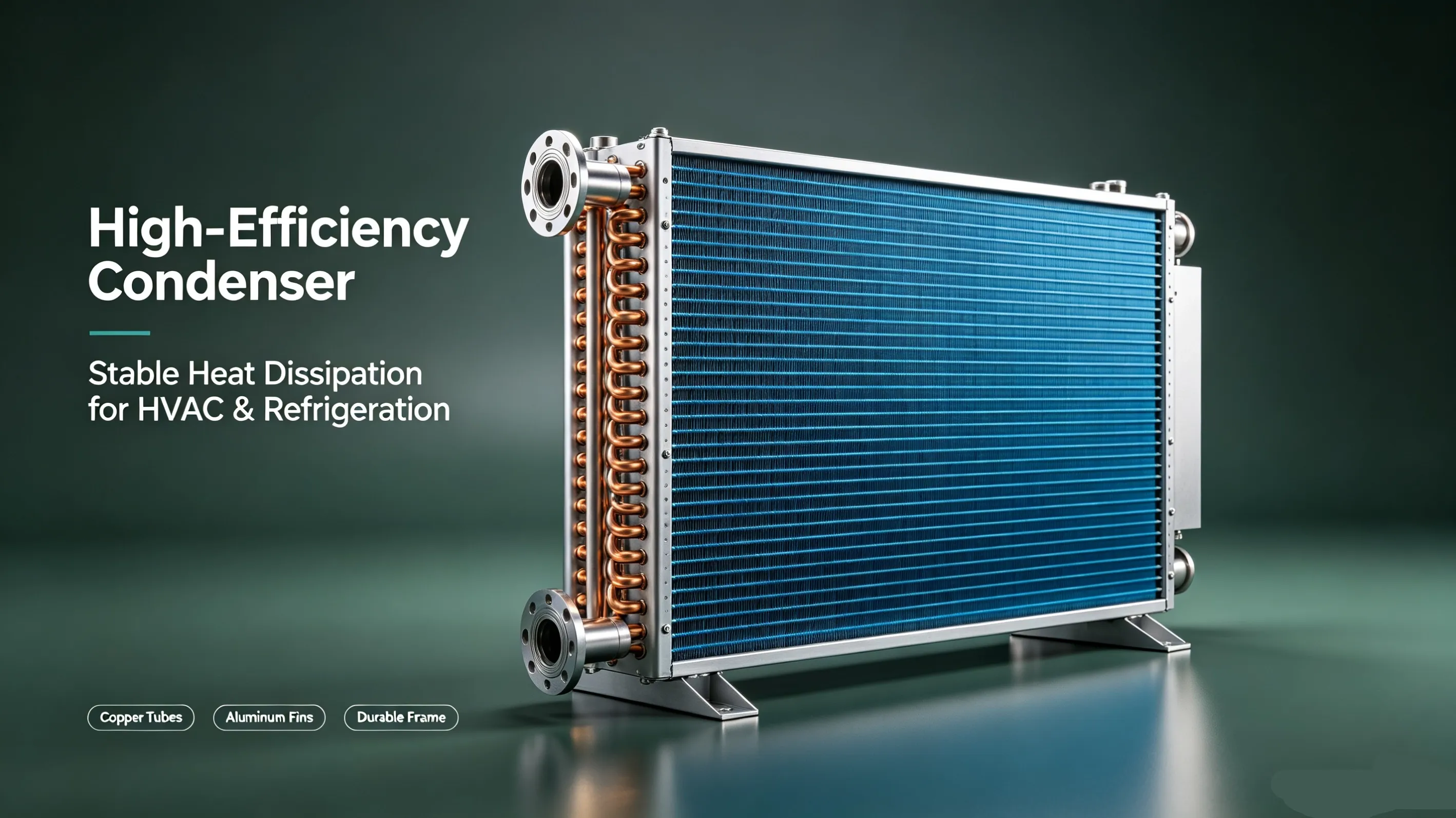
Choosing a suitable condenser is critical to ensure stable system operation, high heat exchange efficiency, and long service life for refrigeration, HVAC, and industrial cooling systems. Below is a standardized, practical selection guide for business and engineering reference.
1. Confirm System Compatibility
First, match the condenser with your core system parameters to avoid mismatched performance and equipment failure.
- Refrigerant Compatibility: Different refrigerants (R134a, R410A, R600a, R22) have distinct pressure and temperature characteristics. High-pressure refrigerants like R410A require condensers with reinforced structural strength and tight sealing to withstand operating pressure.
- Cooling Capacity Matching: Select the condenser heat exchange capacity according to the system’s rated cooling tonnage. An undersized condenser causes insufficient heat dissipation and high system pressure; an oversized model leads to cost waste and low energy efficiency.
2. Select Condenser Type by Cooling Method
Choose the structural type based on application scenarios, installation conditions and operating costs.
- Air-cooled Condenser: No water supply required, easy to install and maintain. Ideal for small and medium refrigeration equipment, commercial HVAC, automotive cooling, and areas with insufficient water resources.
- Water-cooled Condenser: Higher heat exchange efficiency and stable performance, suitable for large industrial refrigeration units, central air conditioning systems, and high-load continuous operation scenarios.
3. Evaluate Material & Craft Quality
Material determines heat transfer efficiency, corrosion resistance and service life.
- Heat Exchange Core: Copper tubes are preferred for excellent thermal conductivity and corrosion resistance; aluminum fins are matched for lightweight and efficient heat dissipation, forming a classic high-efficiency combination for refrigeration systems.
- Surface & Sealing Craft: Premium anti-corrosion coating and precise sealing process prevent leakage, rust and dust accumulation, adapting to harsh outdoor, factory and high-humidity working environments.
4. Check Installation & Environmental Adaptability
- Size & Layout: Confirm installation space size, pipeline interface position and airflow direction to ensure smooth on-site assembly and ventilation.
- Working Environment: For high-temperature, dusty or coastal salt-fog environments, select enhanced anti-corrosion and dust-proof customized models to maintain long-term stable operation.
5. Prioritize Energy Efficiency & After-sales Support
High-efficiency condensers reduce long-term operating power consumption. Meanwhile, choose standardized modular products with stable quality, complete certification and reliable after-sales service to lower maintenance and replacement costs in the later stage.
Summary
The core of condenser selection is parameter matching + scenario adaptation + reliable quality. By verifying refrigerant compatibility, cooling capacity, type, material and environmental adaptability, you can select the most cost-effective condenser for your refrigeration and cooling system.